
Tea Room ADU (House for Trees) near completion
Tea Room ADU (House for Trees) near completion
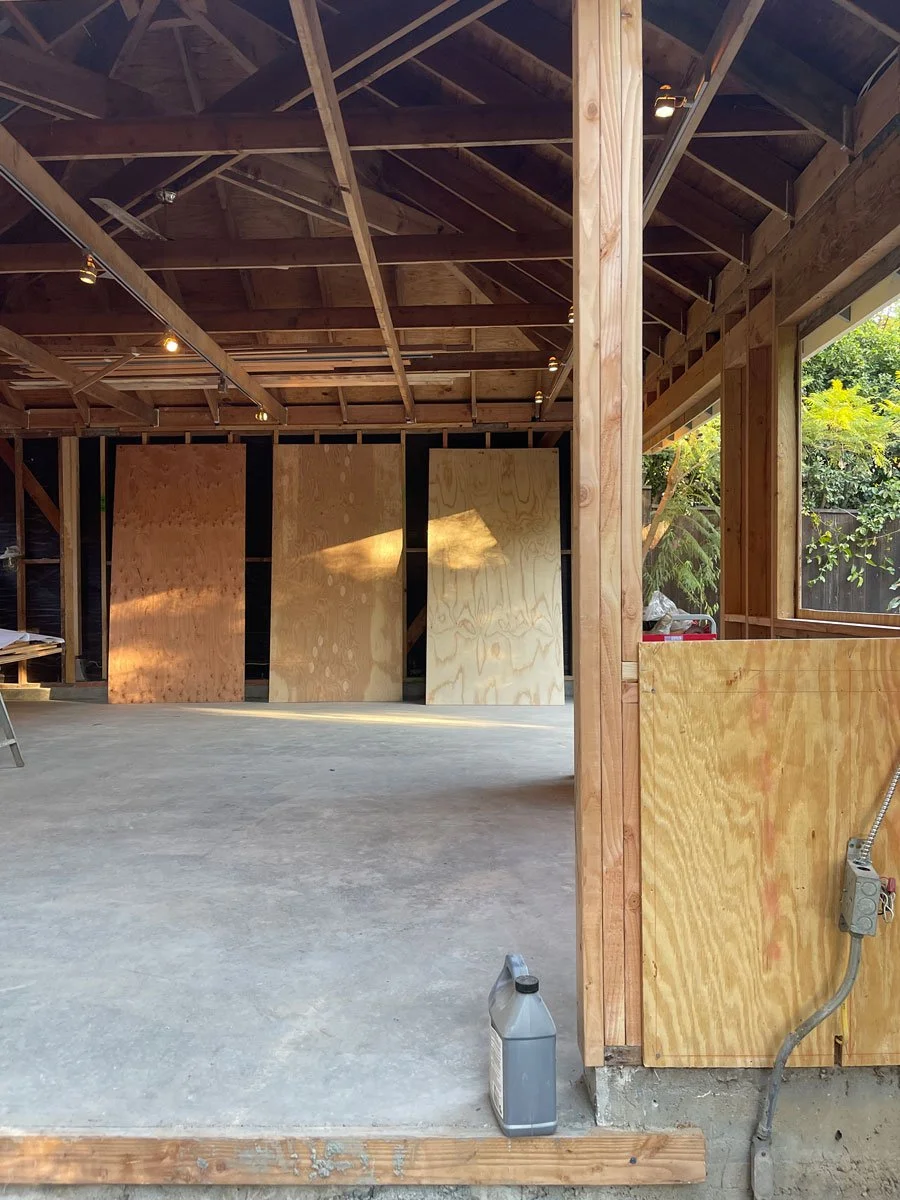
Years ago we responded to a challenge to raise awareness for Tree People LA. We proposed flipping the script: instead of cutting down trees, building houses and then replanting bordering trees, that we flip the script and “Make houses FOR trees!”. As if the trees were our client, full of character and point of view. It has been a beloved idea in the office ever since we proposed it. With this project, we finally found a project and a client to make it happen!
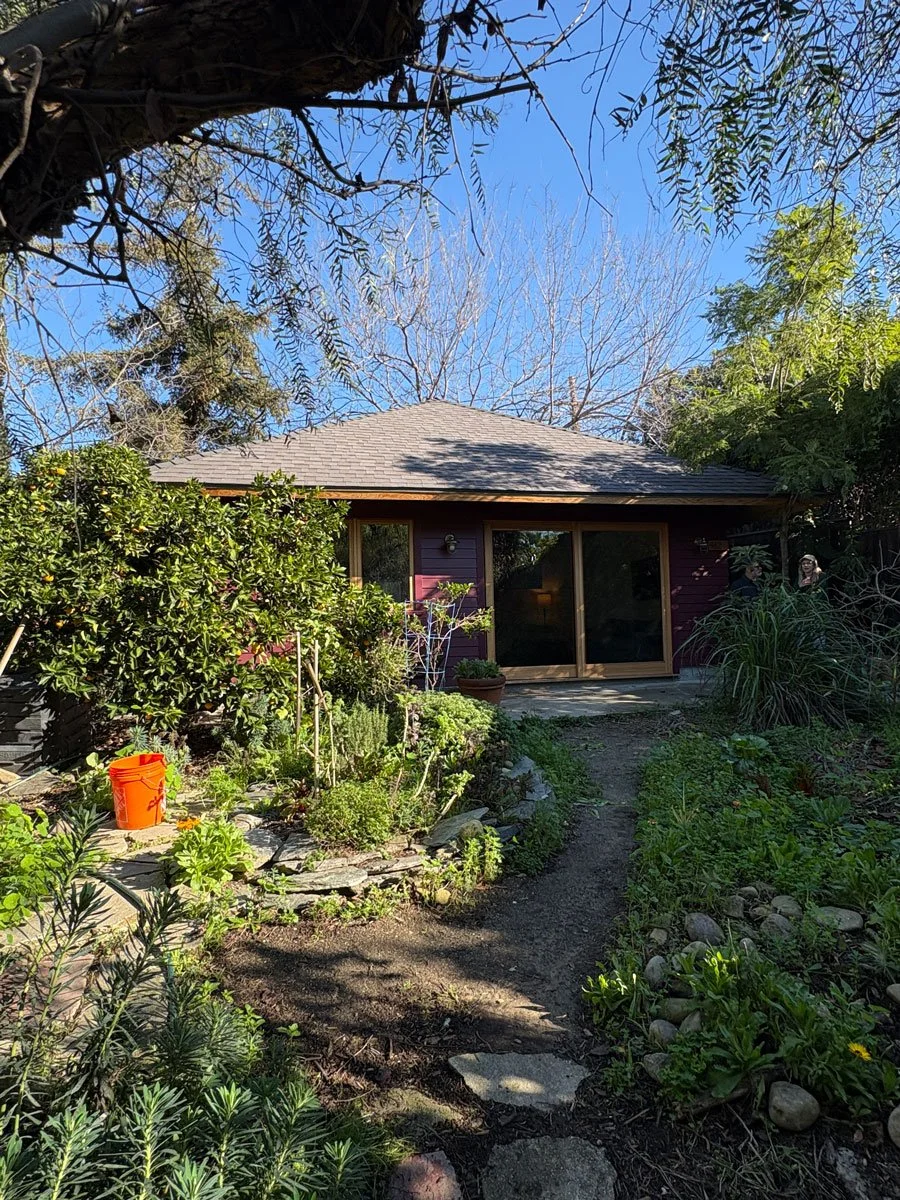
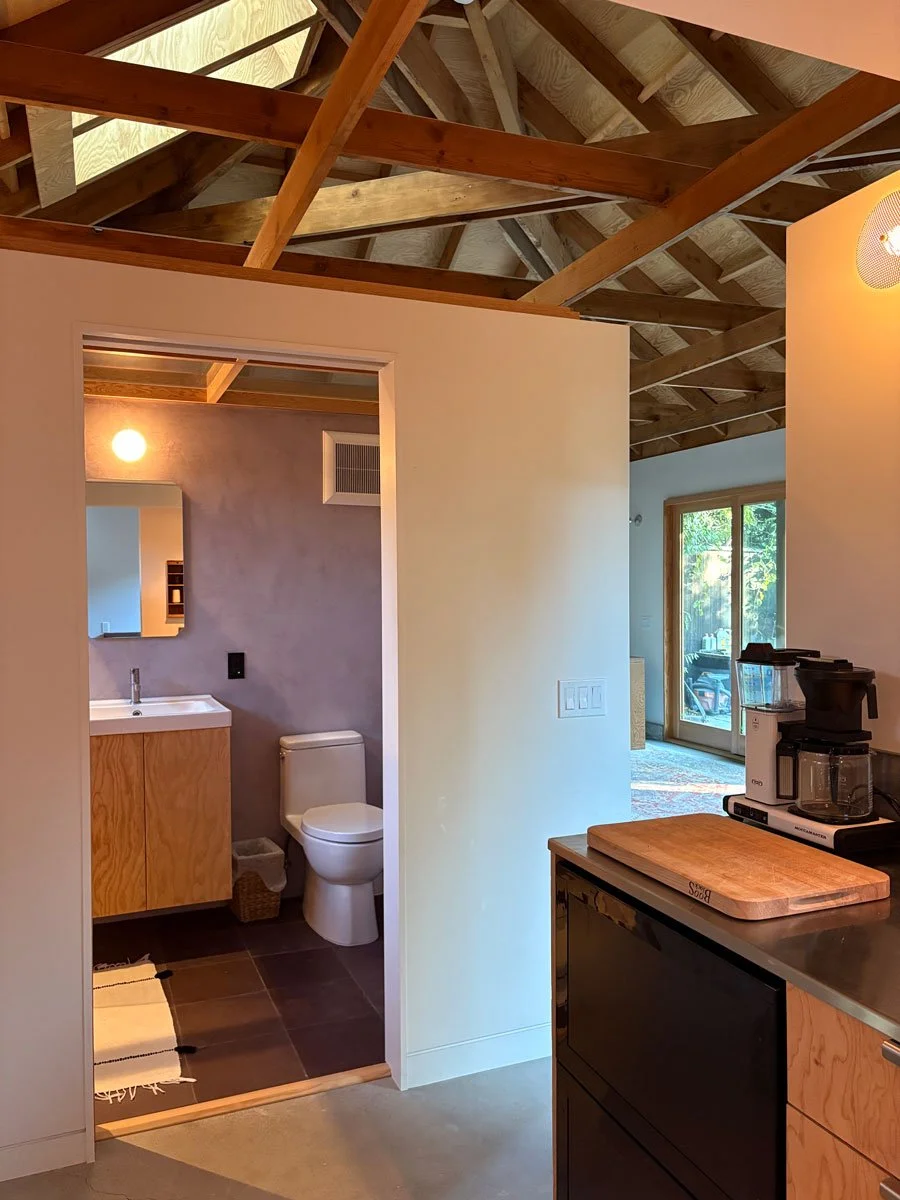
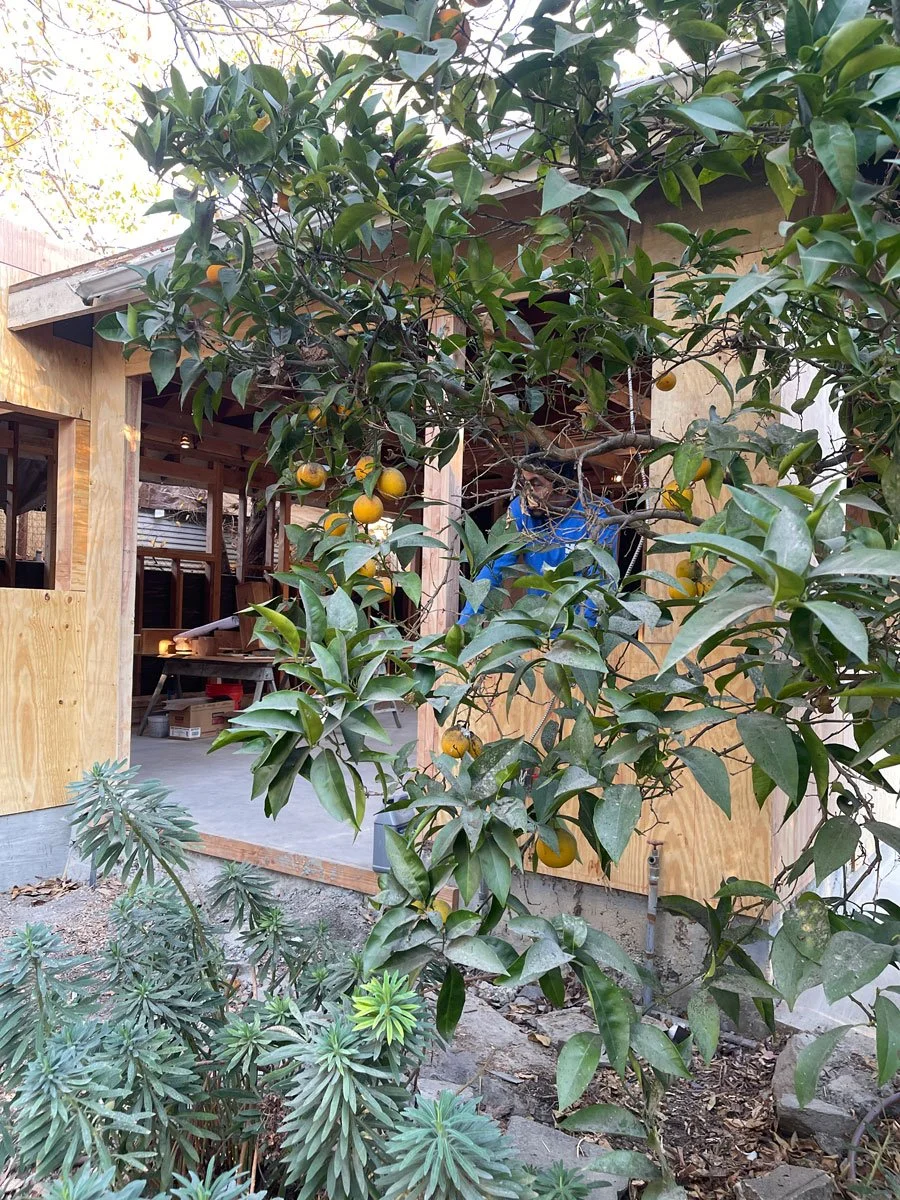
A rare garage conversion with good bones! Set within a gorgeous garden, a mini arboretum: a mature Redbud and a Coastal Redwood surround the garage. Looking up to the rafters, the garage had this complex but practical wood structure supporting the double gable. A bird’s nest of wood.
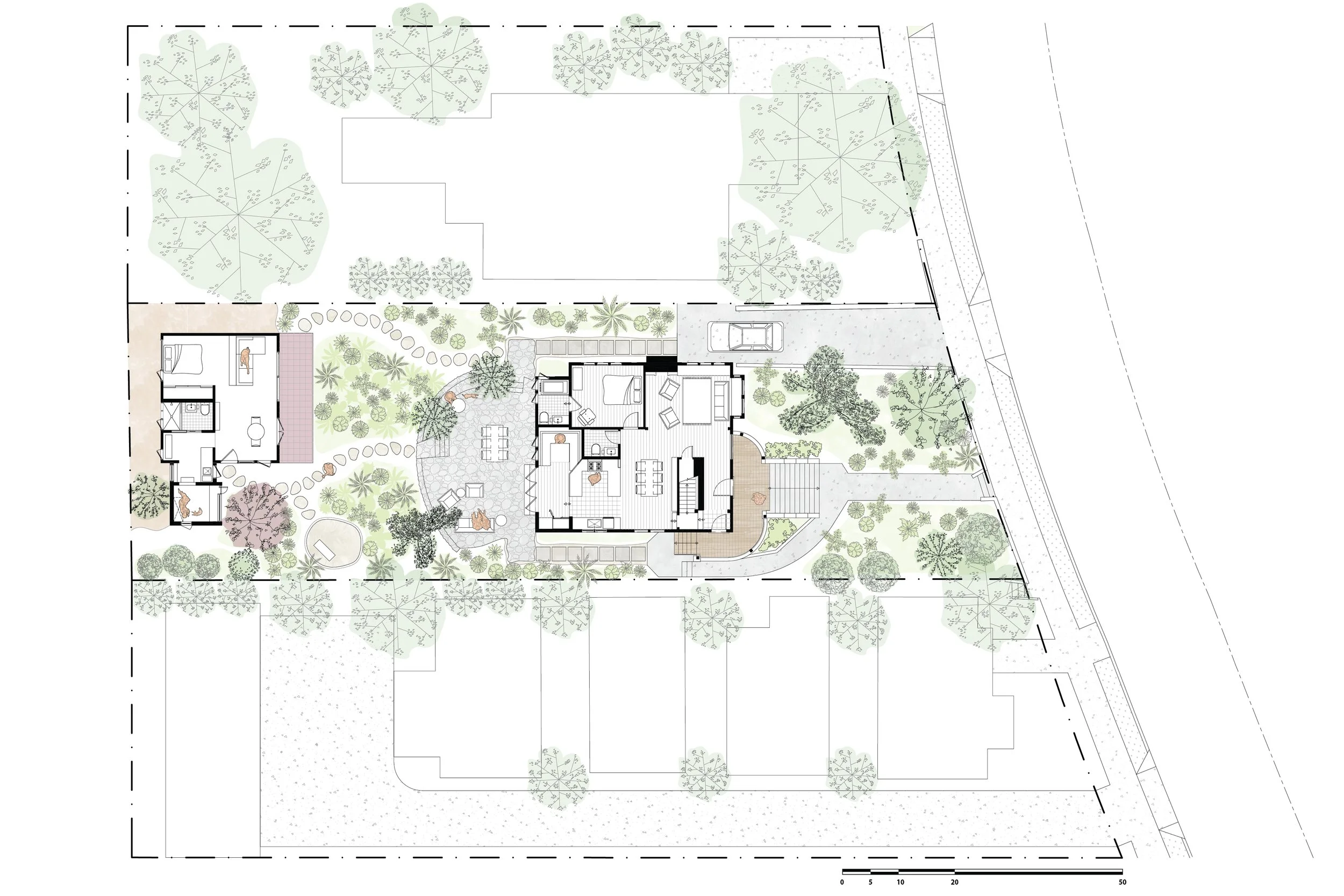
The program was to provide work-related out-of-town guests a place to stay, to coax out-of-town parents to extend their visit to watch young grandchildren, and during quite times, use as their own creative studio.
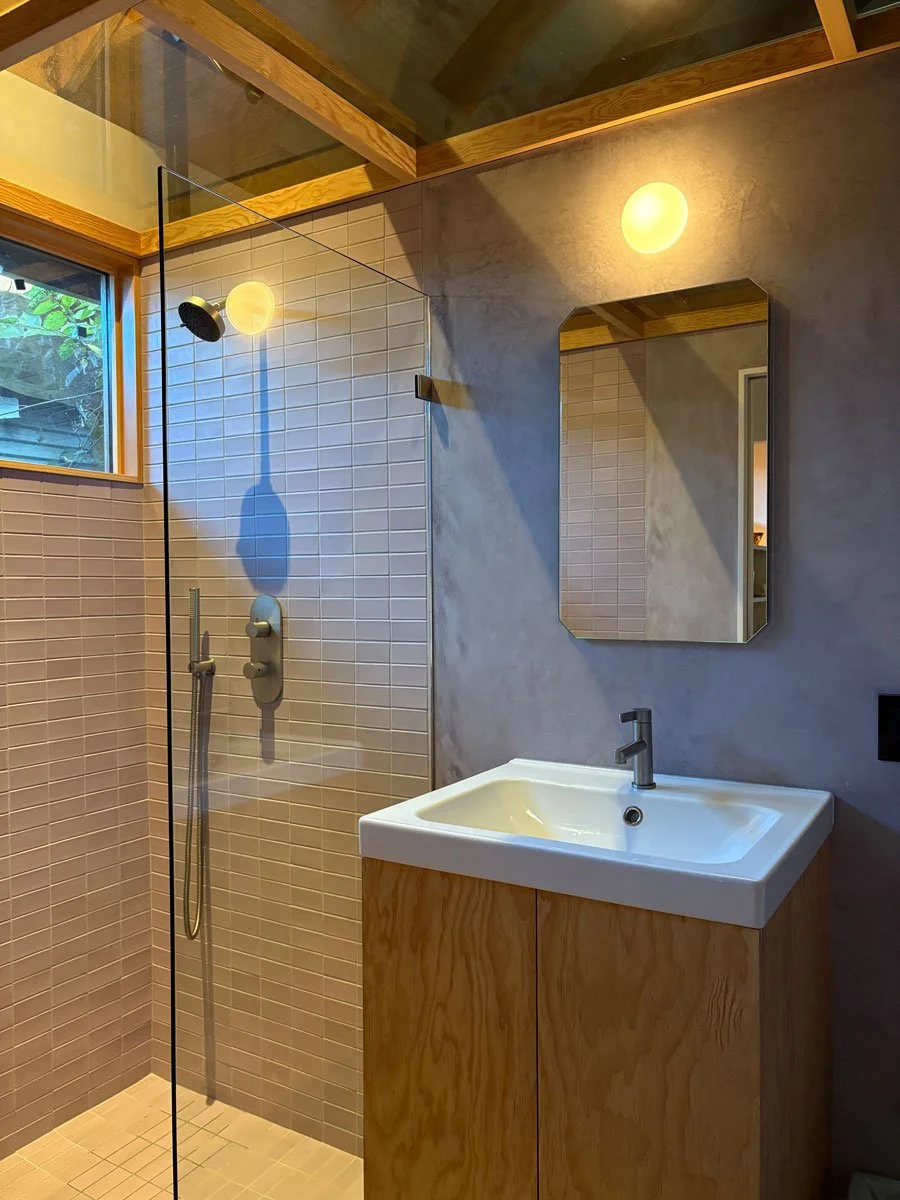
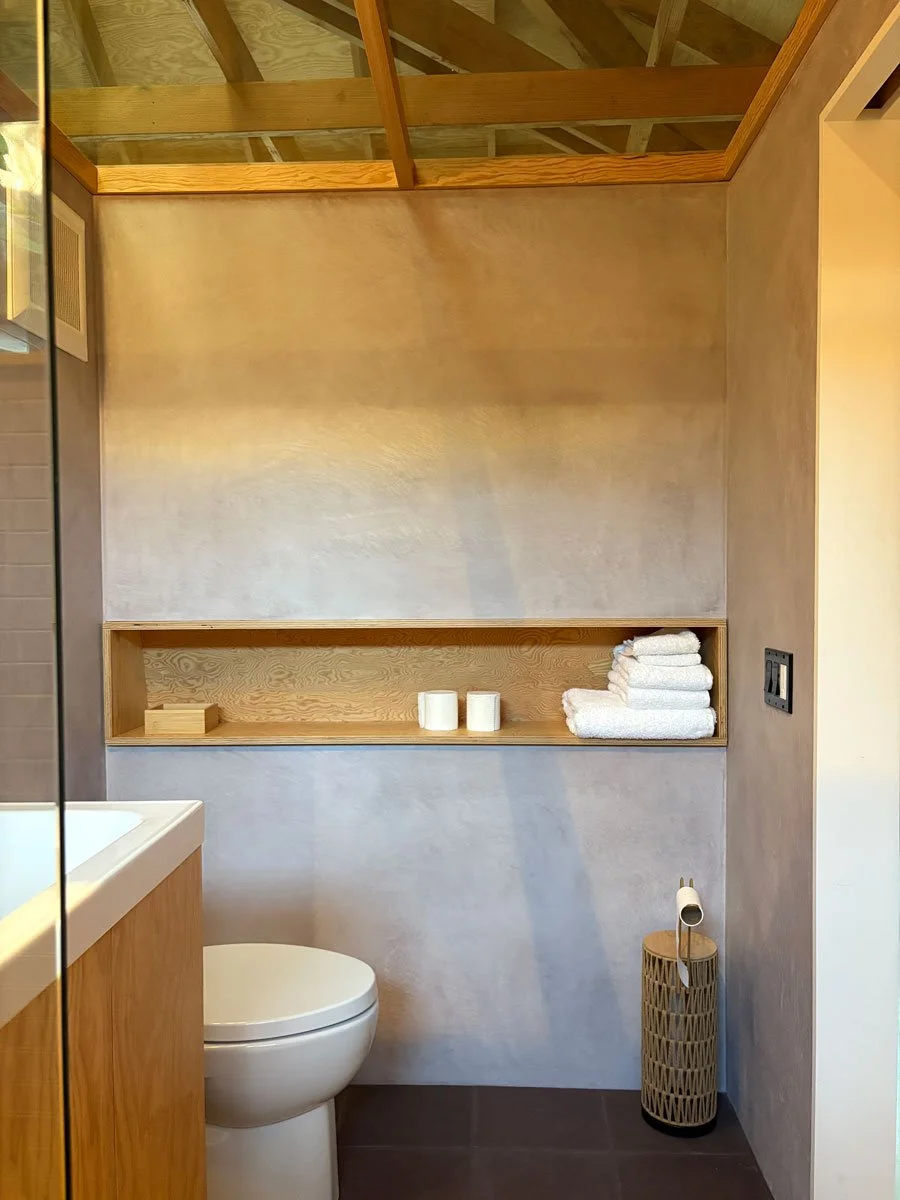
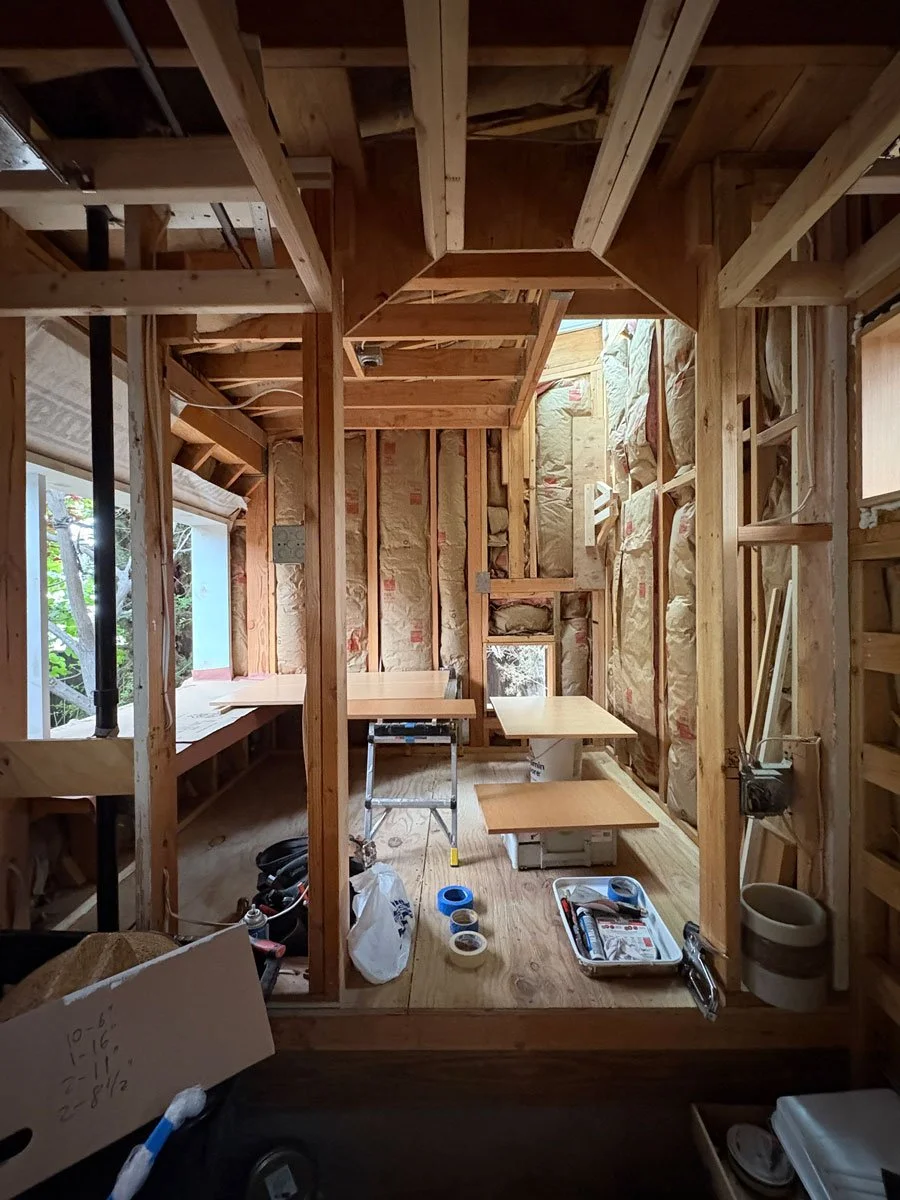
The garage was converted into a living space, a bathroom, and a modest kitchen. The garage space was subdivided by the delicate insertion of the bathroom box. This is an often-used strategy by Bunch that divides space without bringing walls to the ceiling. This allows for an uninterrupted ceiling plan, and in this case, skylights illuminate the bathroom through the plexiglass lid of the bathroom.
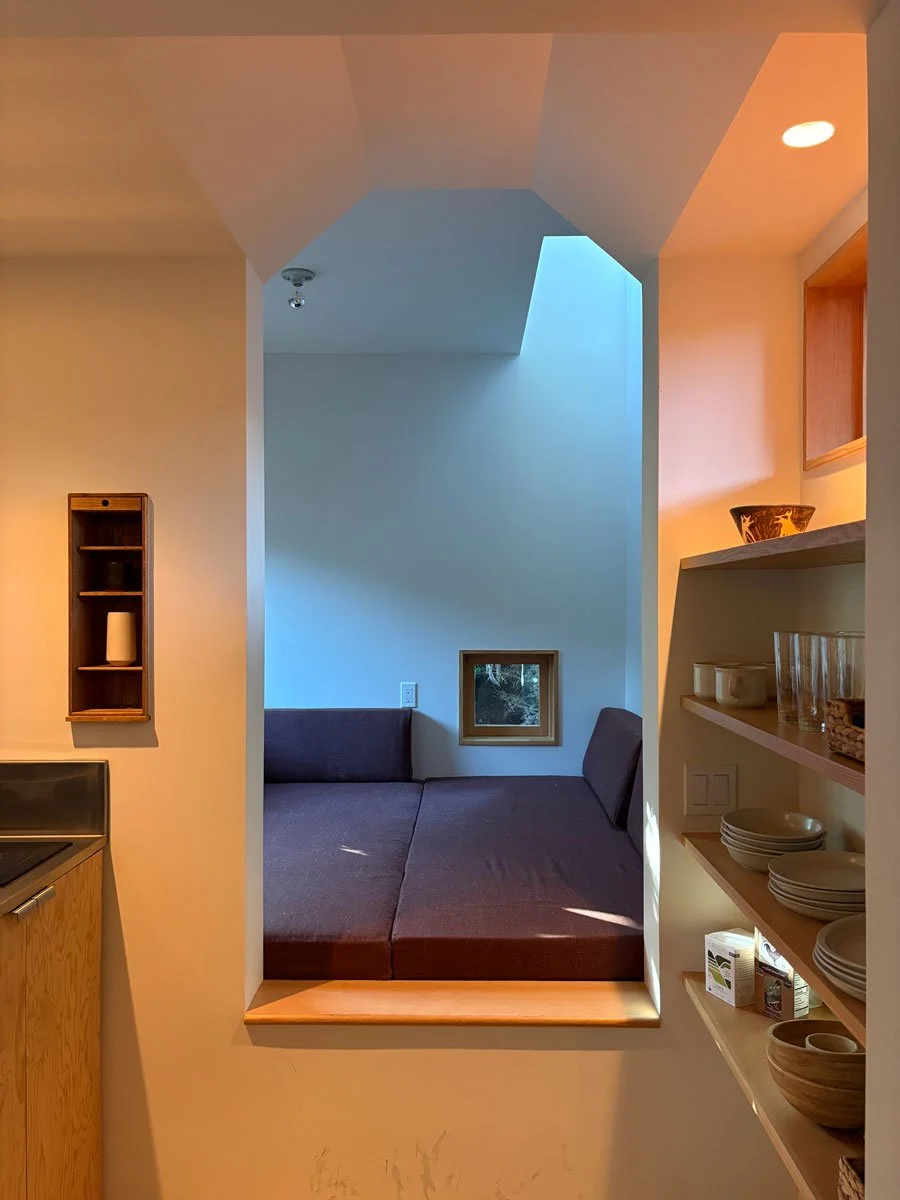
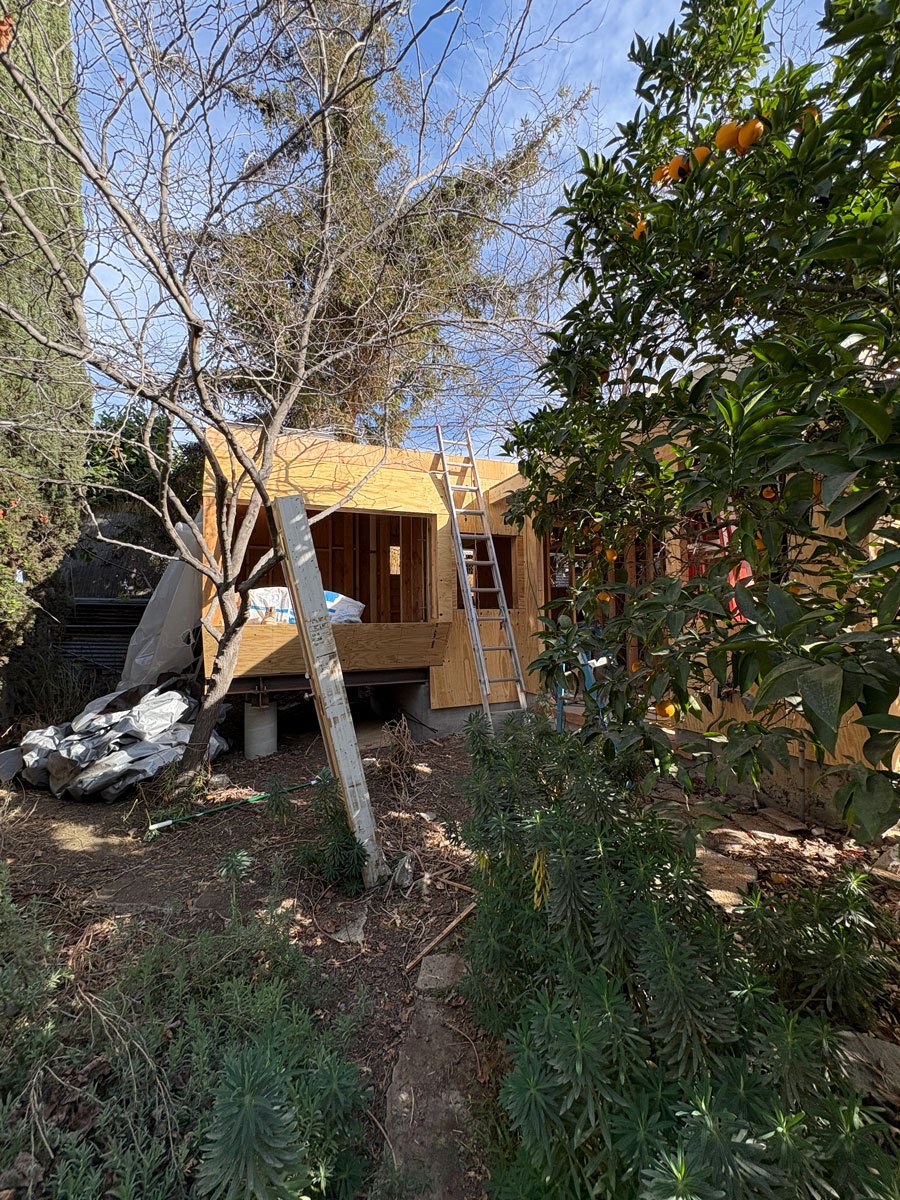
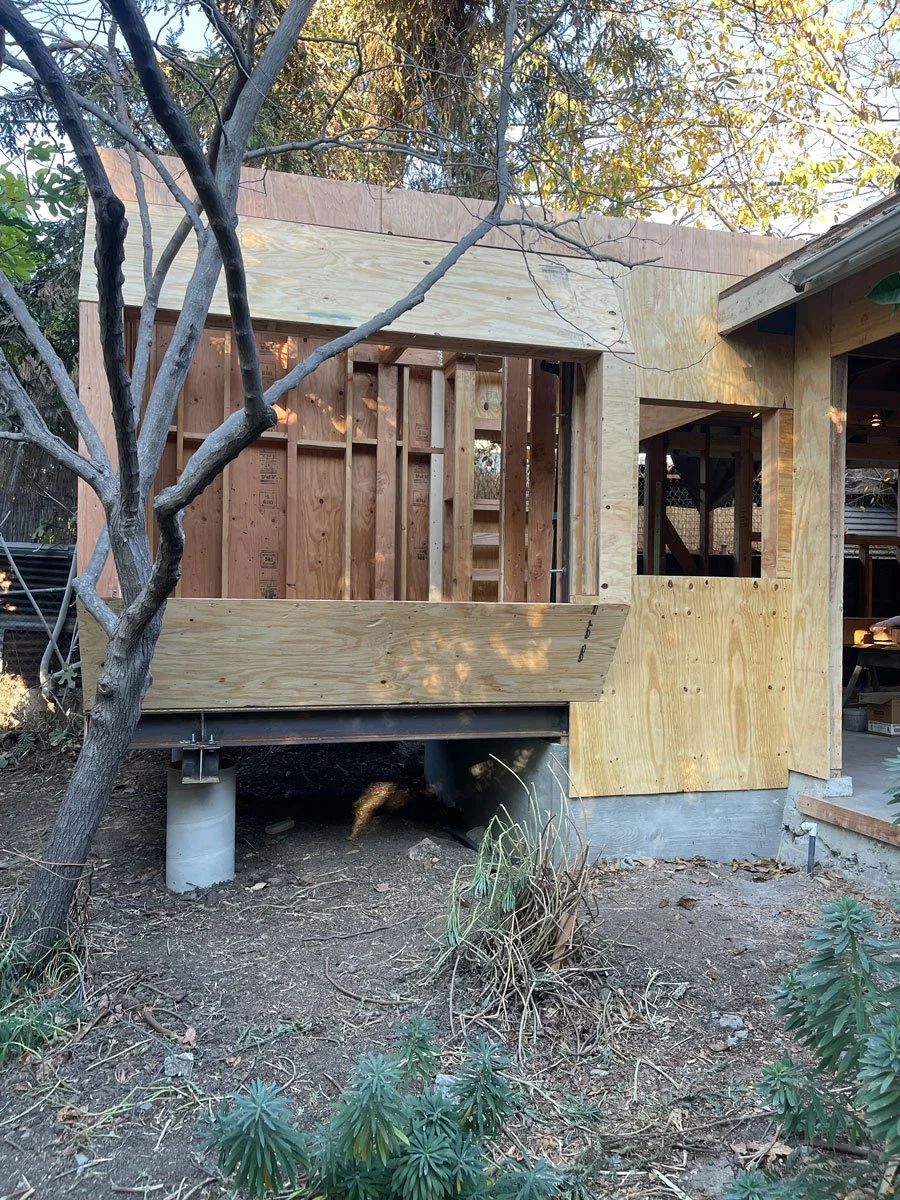
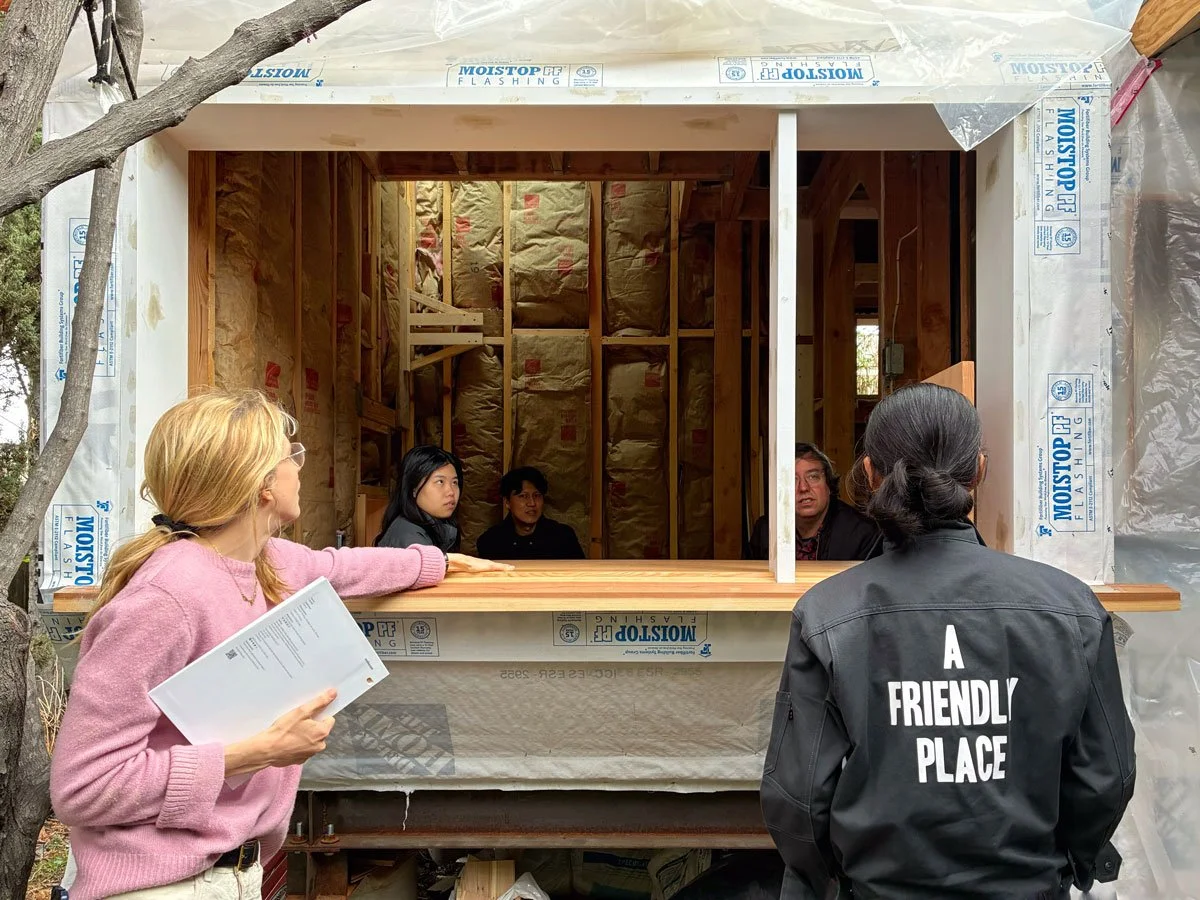
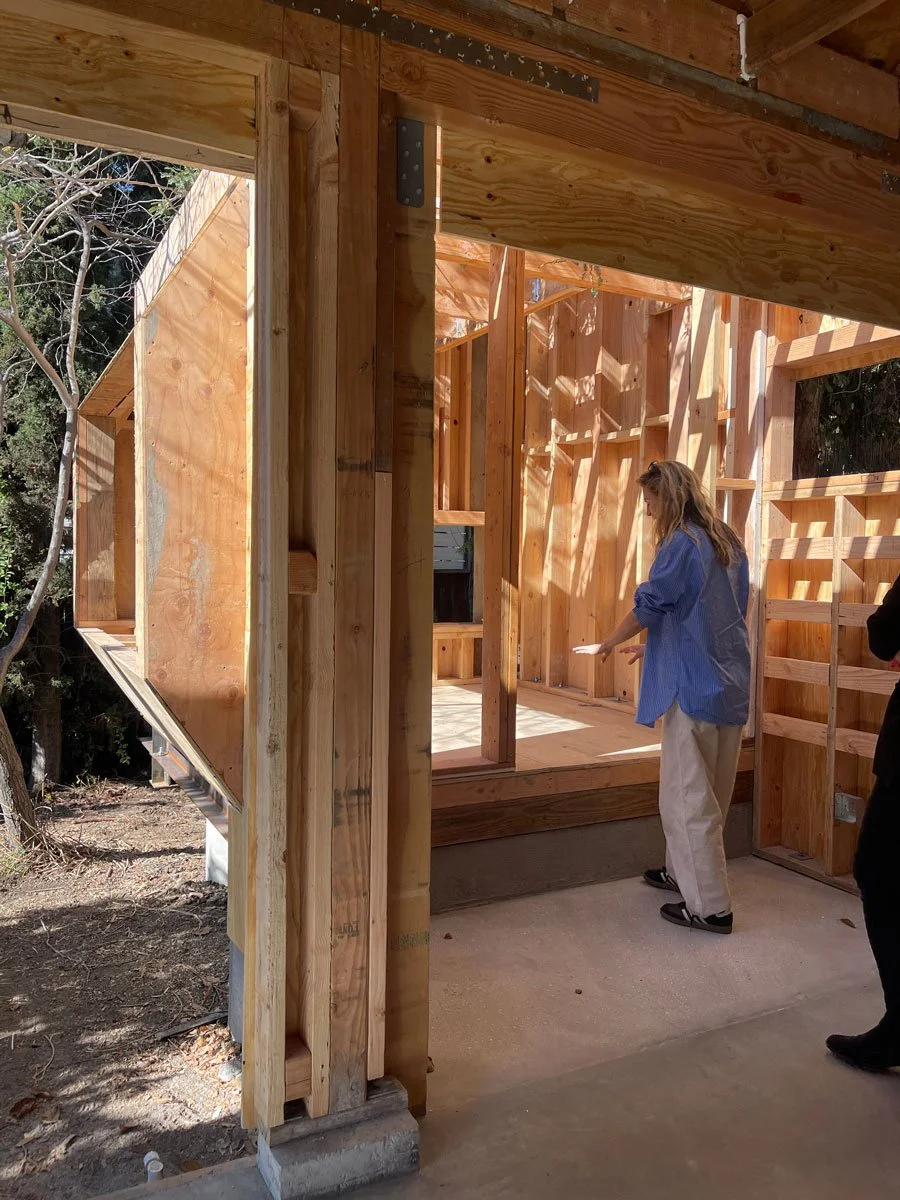
Most fun is a small addition jutting out from the kitchen space like a tree branch, hovering under the redbud tree on a bridge-like structure so as not to disturb the root. This hovering room is just enough for a person to quietly read/write, nap, or on special occasions, entertain a guest with tea. The space is like a miniature spaceship tethered to everyday life but halfway into another dimension.
This transportive emotion is the power of truly performative architectures, an interest of ours. A good reason to travel, to study culture and people. Similar to how the traditional Japanese tea house feels. The shrinking of scale, the intentionality of each angle and opening, the scripted views. A space both present and apart.
Core Architectural Features of Japanese tea house
Nijiriguchi (Crawl-through door): A famously small, low entranceway requiring guests to bow to enter. This symbolizes humility and the idea that all guests are equal, regardless of social status outside the room.
Tokonoma (Alcove): A raised, recessed section of the wall displaying a seasonal calligraphy scroll and a simple flower arrangement
Tatami Mats: The room's size is measured by the number of tatami mats covering the floor. The traditional and most common layout is 4.5 mats. (roughly 9'x9')
Mizuya (Preparation Area): A small, attached anteroom or space where the host prepares the utensils, cleans the tea bowls, and readies sweets prior to the ceremony.
Surrounding Environment
Roji (Garden Path): A carefully curated garden path leading to the tea house that mentally prepares the guest for the ceremony.
- Tsukubai: A low stone water basin placed along the path, allowing guests to wash their hands and rinse their mouths to symbolically cleanse themselves of worldly worries before entering.